Shoko: Expanding his Tiny Inner Circle
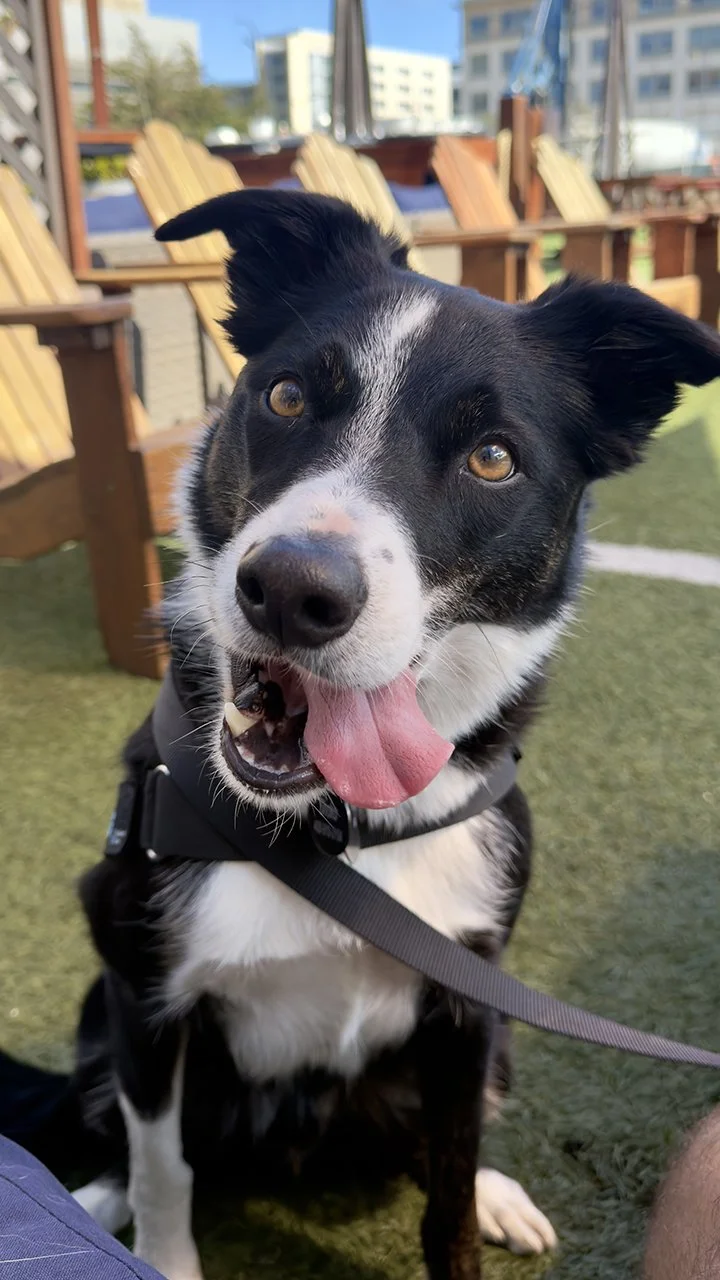
When we first met Shoko, walking through his front door was already asking too much of him. This sensitive Border Collie had a very small circle of trusted people, and any unfamiliar humans entering his home led to barking, lunging, and attempts to nip.
Ilan and Shir understood how much fear shaped those responses, and they respected Shoko’s warnings. That gave us a clear starting point: we would observe carefully, move predictably, and give Shoko the time he needed to learn who we were. For our first sessions, that pace was extraordinarily slow. We could spend four hours sitting at a table while Shoko watched us because even a small shift in a chair could suddenly change his response to our presence.
So we sat, observed, and let Shoko tell us how quickly the relationship could move. What he showed us through those long hours would eventually give Ilan and Shir a clearer picture of how their dog built trust with people beyond his existing inner circle.
Hours of Almost Nothing
By ordinary measures, those early sessions contained very little activity. For Shoko, sharing his home with an unfamiliar person for hours asked plenty of him. Movement carried particular weight. Shoko watched every shift in the chair, and standing up, changing posture, or moving through the room could change his behavior immediately. His crate offered a familiar place to retreat, and we respected the distance he chose. Session after session, Shoko watched, moved away, came closer, and gathered information at his own pace.
Those details helped us understand something Ilan and Shir could use whenever Shoko met someone new. Predictable movement, distance, repetition, and time gave him room to observe a person before deciding whether he wanted to move closer. By the third or fourth session, Shoko chose enough proximity for physical contact to become possible. That small moment rested on hours of watching movement, gathering information, leaving, returning, and deciding how close he wanted to be. Then Shoko revealed something that changed the relationship entirely. He loved trying to chomp water sprayed from a bottle, and suddenly the dog who had scrutinized every movement had invited us into a very silly game.
The Water Bottle Changes Everything
Shoko chased the spray, retreated, returned, and asked for more. Play gave us another way to understand when he felt comfortable enough to participate actively in a relationship. Tug and other shared activities followed. Ilan and Shir already knew Shoko’s playful side, and now we could show them how play helped mark an important shift in the way he related to someone new.
That mattered beyond the water bottle itself. Shoko was teaching us that familiarity could create room for play, and play could give a developing relationship another way to grow.
Ilan and Shir gained another detail to watch when helping Shoko get to know someone. Curiosity might bring him closer first, while willingness to play could tell them that the relationship had reached a very different place. The water bottle arrived after all those quiet hours for a reason. Shoko knew enough about the person in front of him to reveal more of the playful Border Collie his family knew so well.
Sixteen to Twenty Hours Before the First Walk
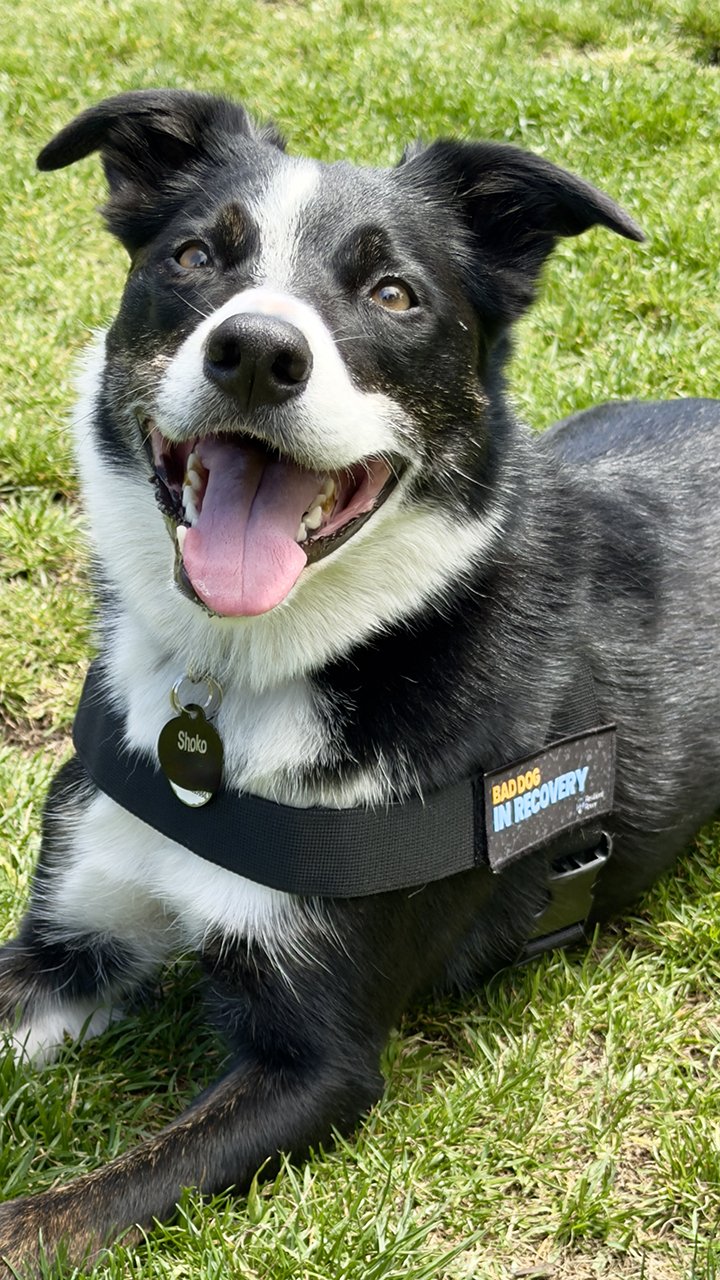
Reaching for Shoko’s leash required another level of trust. After roughly sixteen to twenty hours together across those early sessions, Shoko showed that he was ready for us to leash him and leave the house together. The milestone looked almost comically ordinary: clip on leash, open door, go for a walk. Those few actions rested on many hours of Shoko watching movement through his home and gathering evidence about what to expect. Outside brought new information. Cars and motorcycles could be frightening, which was particularly inconvenient for a dog living near the Hells Angels, while unfamiliar people and dogs could quickly change his response.
Distance gave Shoko room to watch, and familiarity shaped what he chose to do next. We brought those observations back to Ilan and Shir so they could use the same details when deciding how quickly to approach a new person, dog, place, or experience. Shoko had shown us that his pace contained information. Ilan and Shir could watch what he did with distance, whether curiosity returned, and how his willingness changed as something became more familiar.
Trust Makes Introductions Possible
People entered Shoko’s circle in small increments. He took tossed treats from someone he had seen before, then eventually moved close enough to accept food directly from unfamiliar people under carefully chosen conditions. Food gave Ilan and Shir something observable to include in the larger picture. Whether Shoko approached, ate, stayed nearby, retreated, returned, or chose to play helped them understand how a new interaction was developing.
His family once celebrated him stealing toast because the behavior revealed a wonderfully ordinary side of him. For a dog who approached so much of life with intense caution, opportunistic toast theft could feel like a small triumph of canine mischief. Dogs followed their own gradual progression. Early encounters began with generous distance, then developed into parallel movement, greetings, shared spaces, and eventually off-leash interactions.
At Esprit Park, Shoko spent time off leash during a busy period with many dogs around him. He took time to settle into the environment, then greeted dog after dog. Scenes like that gave Ilan and Shir evidence of what Shoko could do when the conditions supported him. They knew the dog who needed time to observe, and they were also seeing how much became available once he had gathered enough information to participate.
More Members of the Inner Circle
Across roughly two years together, Shoko’s circle grew. Ilan and Shir watched him take treats from unfamiliar people, greet dogs calmly, and navigate experiences that once would have asked far more of him. A local barista who knew Shoko from the neighborhood even commented on how different he seemed. The changes were visible to people beyond the small group who understood how much careful work sat behind them.
Ilan and Shir had also developed a richer way to help Shoko build relationships. They could consider movement, distance, familiarity, food, play, and time, then watch Shoko’s response to decide what the interaction needed next. Those skills respected something essential about him. Shoko remained wonderfully selective, and the people who moved closer earned that access by giving him repeated experiences of predictability and safety.
The Dog Behind the Caution
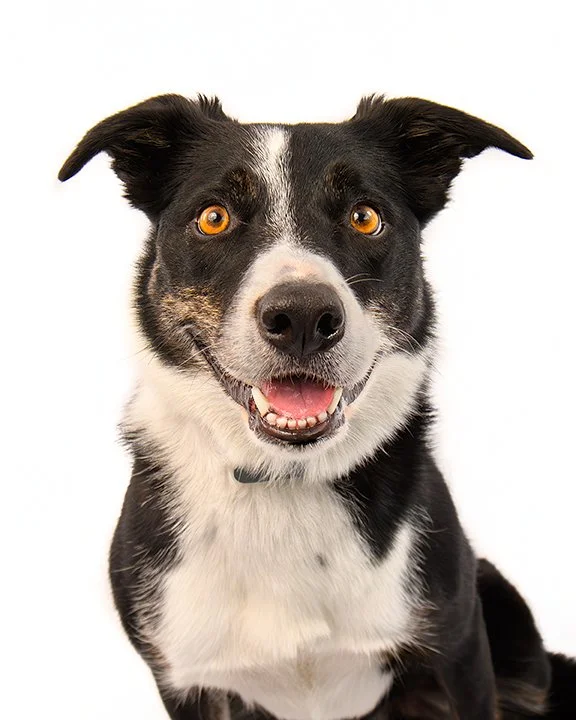
The Shoko we first met watched an unfamiliar person’s smallest movements carefully. Hours of observation came before physical contact, the water-bottle game, reaching for his leash, or walking through the front door together. Eventually there was touch, a ridiculous game, a leash, a walk, new people offering treats, canine friendships, and an afternoon at Esprit Park filled with dogs. Shoko set the pace, and every stage gave us something useful to bring back to Ilan and Shir.
They now had an even clearer picture of how their dog builds trust. Give Shoko room to observe, make movement predictable, let familiarity accumulate, notice when curiosity brings him closer, and recognize the moments when food or play show that something has shifted. That makes the water bottle a fitting image for everything that followed. Behind all that careful observation was a playful Border Collie who needed time to decide when someone was ready to see more of him.
Shoko’s inner circle remains something worth earning, and our place in it taught us more about how he decides whom to welcome there. We turned those lessons into information Ilan and Shir could carry forward, one quiet observation, one careful movement, and eventually one very silly spray of water at a time.