Rio: Making Consent a Part of Conversation
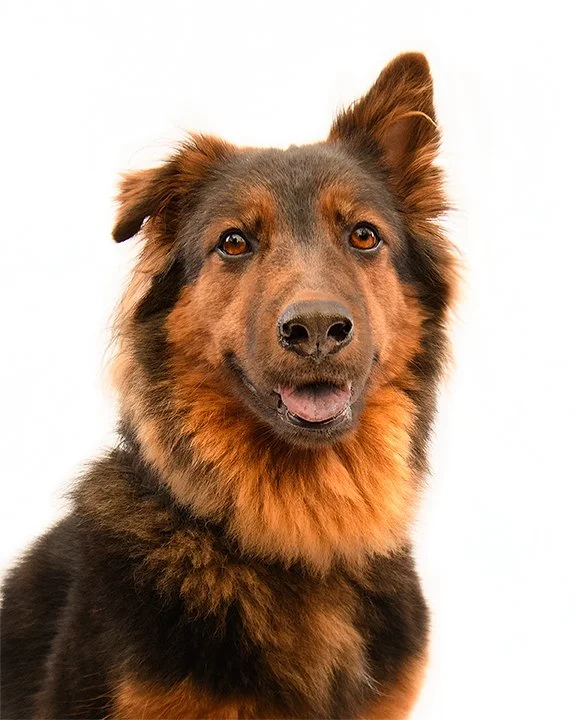
When Teddy and Mayan first came to us, Rio had just experienced an enormous life change. Their Hong Kong Village Dog had flown across the world with them to San Francisco, and within about a week he was navigating unfamiliar streets, sounds, people, and temporary housing in one of the busier parts of the city.
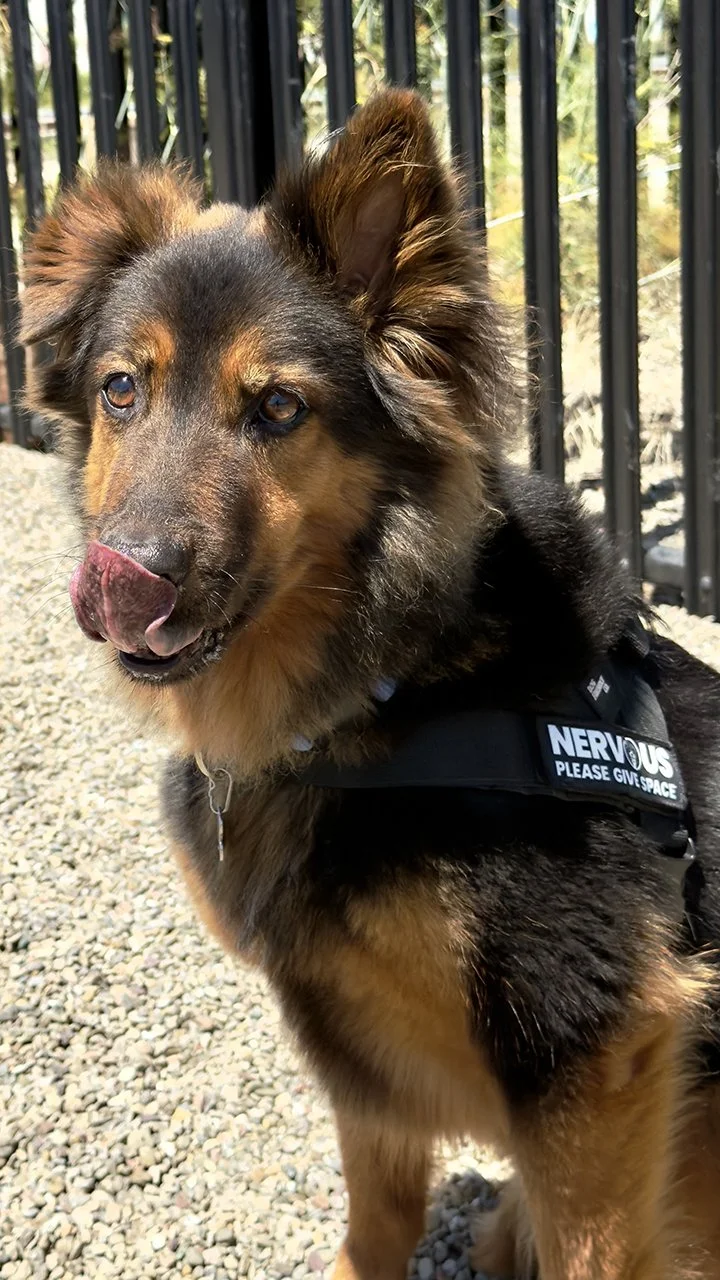
Rio cared deeply about what happened to his body, his space, and the things he valued. Metal storefront gates and garage doors could send him pulling for distance, unfamiliar people could lead him underneath café tables, and dogs approaching too quickly could make him uncomfortable. At home, that sensitivity extended to possessions. Socks, shoes, remote controls, blankets, toys, dog beds, and other resources sometimes prompted growling and bared teeth when Rio became concerned about someone approaching. Handling carried similar weight. Some days, presenting a harness or leash prompted Rio to show his teeth or growl, so helping Teddy and Mayan give him a clear way to participate in what happened to his body became central to our work.
When Everyday Things Require Trust
Early work with Rio moved slowly because ordinary interactions could carry tremendous emotional weight. Leaving the apartment might involve someone approaching him, attaching equipment, entering a hallway, riding an elevator, and stepping into a city filled with unpredictable sounds and movement. Some sessions took us only as far as the building lobby. Rio might refuse food, pull toward the elevator, and communicate clearly through his behavior that returning upstairs was the choice he wanted to make.
We worked in small pieces and helped Teddy and Mayan do the same. They practiced exchanges around possessions using food Rio genuinely valued, while handling progressed through brief interactions where his response determined what happened next. A tab lead reduced direct reaching while that trust developed. Eventually, Rio reached a milestone that looked wonderfully ordinary from the outside: he stayed comfortable as a person approached and attached his leash directly. For Rio, ordinary activities could require extraordinary trust. For Teddy and Mayan, each interaction became an opportunity to notice what participation looked like and let Rio’s response guide the next step.
More Room to Participate
As part of Rio’s growth trajectory, we discussed pharmaceutical support. Rio’s veterinarian agreed, and prescribed fluoxetine as a trial..
As the medication took effect, Teddy and Mayan saw fewer intense guarding episodes, less fear around going outside, and more affiliative behavior when Rio’s leash and harness appeared. Approaching him, preparing for a walk, and moving through previously difficult transitions became more manageable. Those changes gave Rio more opportunities to participate in the interactions happening around him. They also gave Teddy and Mayan more room to observe his smaller responses and use them when deciding how to proceed. Then we introduced a deceptively simple question. An open palm became an invitation, and Rio got to supply the answer.
Touch
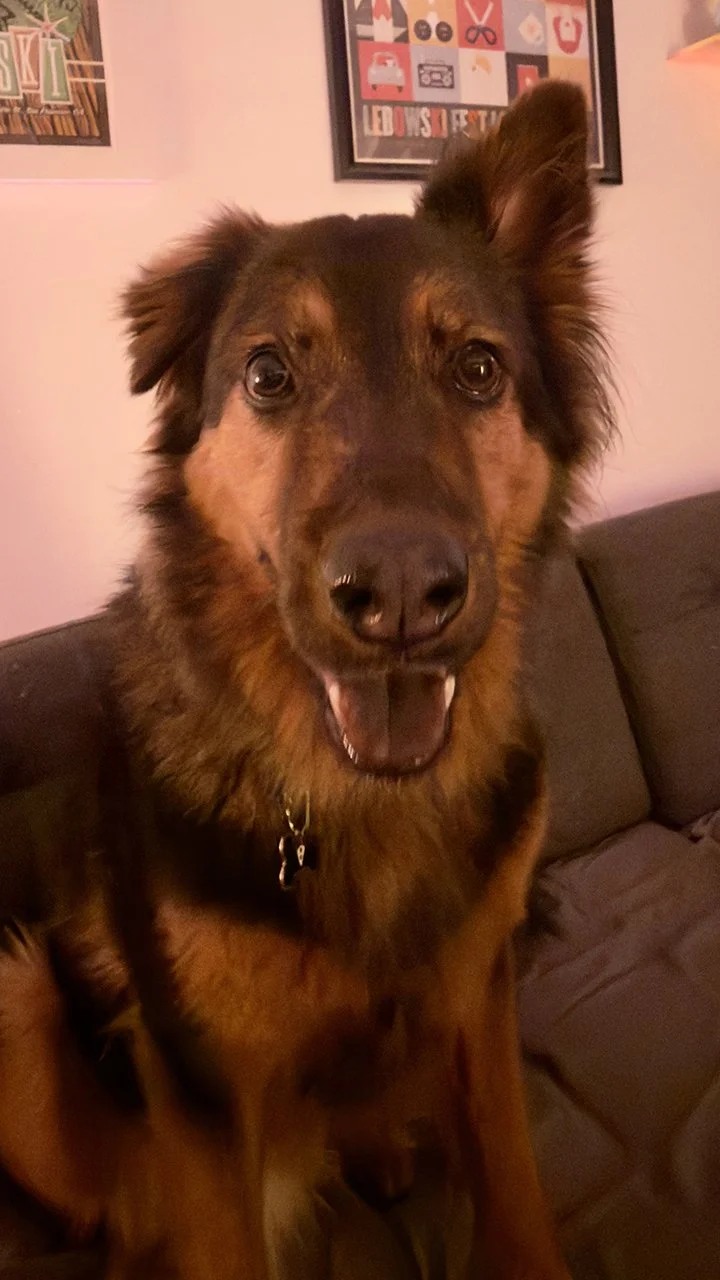
We taught Rio to place his nose against an offered palm when invited to “touch.” The behavior was simple, and its value came from the conversation it created around everyday handling. Before reaching toward Rio, attaching a leash, putting on his harness, or continuing with another interaction, an offered palm gave him a familiar way to participate. Rio could move forward and touch it, while the person beside him could read his response before proceeding. We taught Teddy and Mayan to use that exchange themselves. A nose moving toward the palm gave them one piece of information, while Rio remaining where he was invited them to pause, adjust the interaction, give him time, and watch what he communicated next.
That made touch useful far beyond the trained behavior itself. Teddy and Mayan had a practical language they could use to ask a question, and Rio had a clear, observable way to answer. For a dog whose history had made reaching hands consequential, that small exchange carried a great deal of meaning. Consent became something Rio, Teddy, and Mayan could practice together.
The Hand Matters
Rio’s sensitivity around human hands remains important. Unfamiliar people are still difficult for him, particularly during the greeting sequence where someone offers a hand for him to sniff and then reaches over his head to pet him. It gives us very specific details to watch for, and helps us ensure we give Rio time to consent. It forces us to notice whether he chooses to say yes, and gives us the opportunity to help the other person move at a pace that Rio can handle. Teddy and Mayan understand more about the conditions that support willing participation, and they know that unfamiliar hands call for particularly careful listening.
Then the Ears Change
Rio has a wonderfully clear way of showing when connection feels good. With people he trusts, his ears soften and drop, his body loosens, and his tail starts going.
Then the vigilant dog who has worked so hard to manage proximity can become what we affectionately call an enormous cuddle monster. Those ears, that loose body, and Rio’s decision to move closer give Teddy and Mayan a very different answer from the growl, stillness, or movement away that may appear when he needs something else. They have learned to value both kinds of information. Reading Rio means noticing the moments when he asks for space and the moments when his whole body says closeness sounds wonderful. That shared understanding travels with them. Rio joins Teddy and Mayan on road trips and stays with them in hotels, carrying the communication they have practiced together into unfamiliar places.
Its meaning also lives in much smaller moments. A harness can begin with an invitation, a leash can follow Rio’s participation, and an approaching person can leave room for his answer.
The Answer on the Other Side of the Hand
Touch began as a simple trained behavior and grew into a practical language Teddy, Mayan, and Rio can use together. Teddy and Mayan offer the question, watch Rio’s response, and use what he tells them to guide what happens next. Sometimes Rio answers before a palm appears. His ears soften, his body loosens, his tail moves, and Teddy and Mayan recognize a dog choosing connection. Other times, they see a response that asks them to slow the interaction or create more room. Their growing fluency gives both answers value because Rio’s participation remains part of the conversation.
The offered palm still captures their work beautifully. A hand waits, Rio chooses whether to close the distance, and Teddy and Mayan know how to listen and advise accordingly, based on the answer he gives.