Mona: Learning to Speak Up for Her
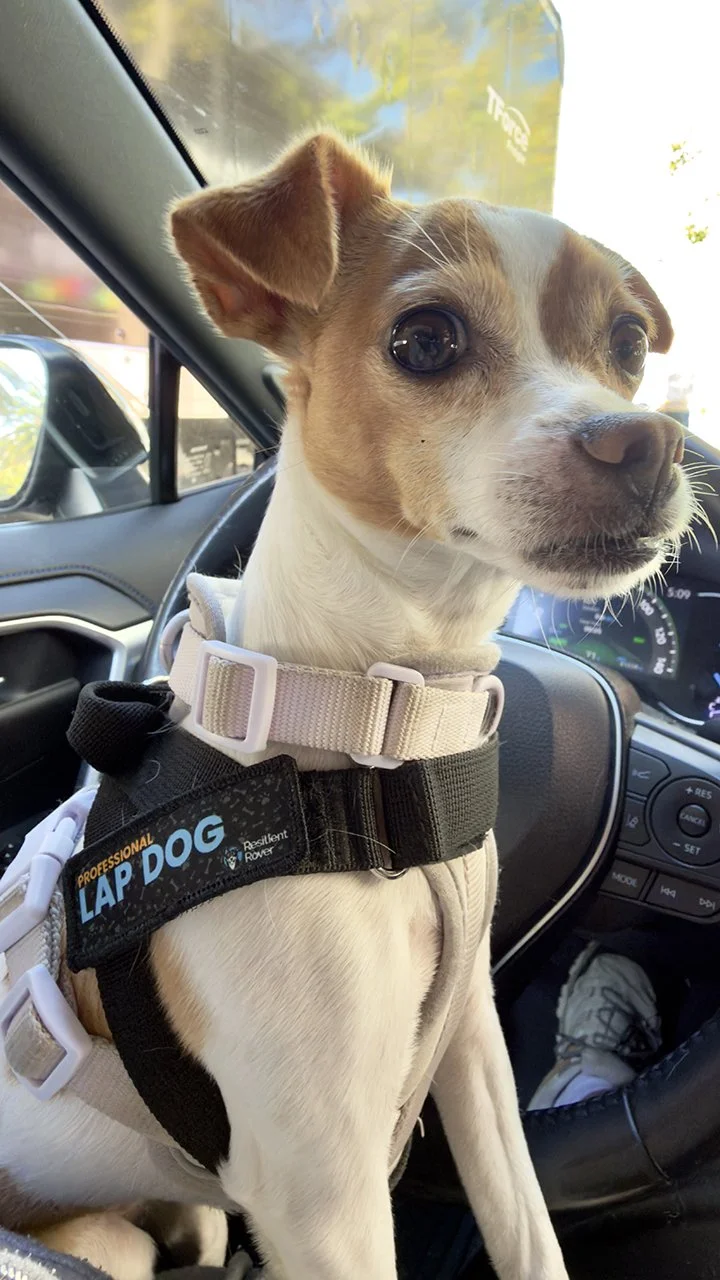
In our first training session with Mona, we ended up being asked to leave a restaurant due to Mona’s barking. Maria went there regularly and wanted Mona, her tiny Chihuahua and Jack Russell mix, to share that part of her life.
Before we even sat down, Mona was already barking at the waiters. Dark uniforms, quick movements, and people moving near the table was too much for Mona to process. Maria became increasingly embarrassed as Mona barked, and eventually they were asked to leave. She wanted to include Mona in her life while caring for her comfort and the experience of the people sharing those public spaces with them. Our #1 goal became making sure that never happened again.
Cheddar Diplomacy
The restaurant was our training session with Mona, but we already knew her. Several months earlier, she had come to us for a photo shoot and arrived extraordinarily timid around unfamiliar people. Getting Mona comfortable enough to participate required patience, careful observation, and a compelling amount of cheddar cheese. Little by little, Mona stayed closer, engaged with us, and showed that she had room to continue, and we completed the photo session successfully.
Maria had watched an unfamiliar person pay close attention to Mona’s responses and adjust the interaction accordingly. She had already made considerable progress with Mona on her own, and that earlier experience gave her a useful example of how observation, time, space, and something delicious could change what became possible. Now Maria wanted to develop those skills herself. She wanted to read Mona more precisely and guide her through the unpredictable movement, unfamiliar people, dogs, and busy environments they encountered together.
Public Life Moves Fast
Mona had some very specific opinions about how people should move around her. Men could be difficult, along with swinging arms, overhead movement, joggers, waiters, unusual gaits, and people passing quickly through her space.
Food gave us a useful way to read how much Mona had available in a given moment. When she ate, stayed connected, and responded, her behavior showed that she still had room to process what was happening. Losing interest in even excellent food told us the situation had become considerably harder. We practiced around movements and situations that appeared regularly in Mona’s life, adjusting distance, duration, and intensity according to her responses. Just as importantly, we helped Maria identify those same changes herself.
Maria watched whether Mona ate, stayed connected, changed her body position, vocalized, or shifted her attention. Those observations helped her decide whether Mona was ready to continue or needed her to change something about the interaction. That skill traveled far beyond a training session. Maria was learning to translate what she saw in Mona into practical choices while everyday life kept moving around them.
Maria Finds Her Voice
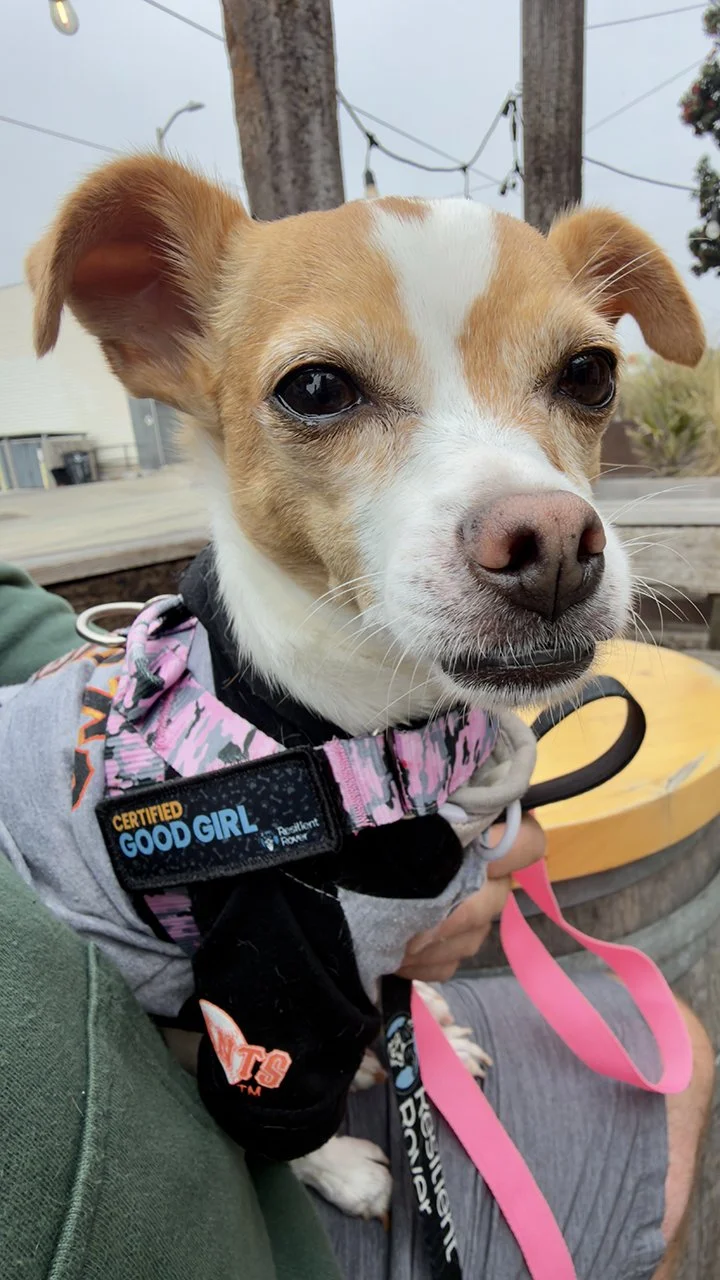
Maria had always cared deeply about Mona’s comfort. As she became more fluent in Mona’s communication, that care turned into clear action. She could ask someone to give Mona more space, explain how an approach would be easier for her, or guide an interaction while Mona’s signals were still small. Maria knew her dog, and she was becoming increasingly confident helping other people understand her too.
That changed public outings for both of them. Maria could notice Mona’s response early, shape the interaction, and watch what Mona did next. Sometimes Maria could say, “She needs a little more room.” Other times, Mona’s body and behavior told her that they were ready to keep going. Mona still had a voice in every decision. Maria had simply become much better at making sure the rest of the world heard it.
Mona Has Opinions
Of course, Mona contributes plenty of commentary of her own. She enjoys being held and has developed an impressive collection of little grumbles for the occasion. A cuddle can earn a grumble. Nervousness has another version, and the car apparently provides enough material for an entirely separate editorial department. Maria has learned to hear the differences. She recognizes the familiar sounds of ordinary Mona commentary and notices changes in Mona’s voice, body, attention, and engagement that tell her something in the environment deserves a closer look.
That knowledge gives Maria something especially valuable in public. She can read the dog she knows intimately and translate Mona’s communication for people who have only just met her.
Fisherman’s Wharf
Eventually, Mona and Maria practiced at Fisherman’s Wharf, where the world kindly assembled an almost comical concentration of Mona’s historical concerns. Joggers, skateboarders, bicycles, tourists, waiters, dogs, noise, unpredictable movement, and people passing nearby all joined the outing. Mona moved through the area, paused on benches, watched the activity, and continued when her behavior showed that she had room for more. Maria stayed attentive to the details she had learned to read and knew how to respond if Mona needed space or another adjustment. That mattered because Maria now carried the skills herself. In one of San Francisco’s busiest environments, she could watch Mona, interpret what she saw, and guide their next choice while the world continued moving around them.
Other outings reinforced that ability. Mona spent time in a busy Starbucks and returned to places such as Marina Green, where joggers and rapidly moving people had once been especially challenging. Each setting gave Maria another opportunity to use what she had learned. She noticed Mona’s early signals, spoke clearly to the people around them, adjusted when needed, and let Mona’s response guide what happened next.
Staying at the Table
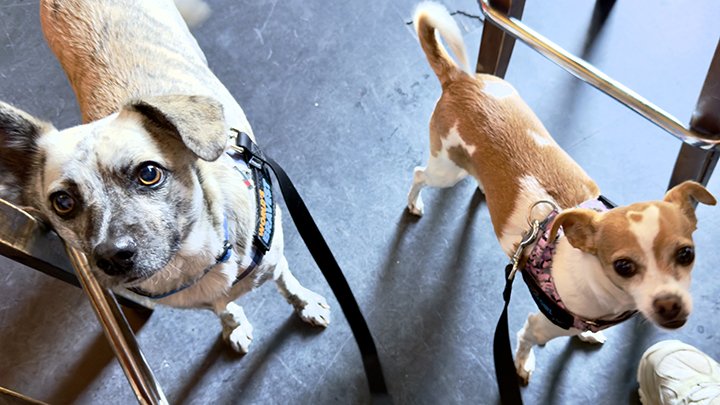
Some of Mona’s familiar responses still resurface, especially when practice becomes less regular. Maria meets those moments with a much richer understanding of what Mona is communicating and a practical sense of how to respond.
That brings their story back to the restaurant where their formal work began. Maria once sat at the table feeling increasingly embarrassed as Mona struggled with people moving around them, and the evening ended with the two of them leaving. Today, Maria notices earlier and speaks up sooner. She knows Mona’s grumbles, sensitivities, body language, and unmistakable opinions, and she knows how to help the people around them understand what her little dog is communicating. Our role was to help Maria see more of what Mona was already saying and turn those observations into choices she could carry into everyday life. Maria now brings that fluency to restaurants, parks, busy streets, and all the other places she hopes to share with Mona.
Mona still brings plenty of opinions when she takes her place in public life, and Maria knows how to listen to them. Wherever they go together, Mona brings her own translator and advocate with her.