Haru: Learning That He Can Be Heard
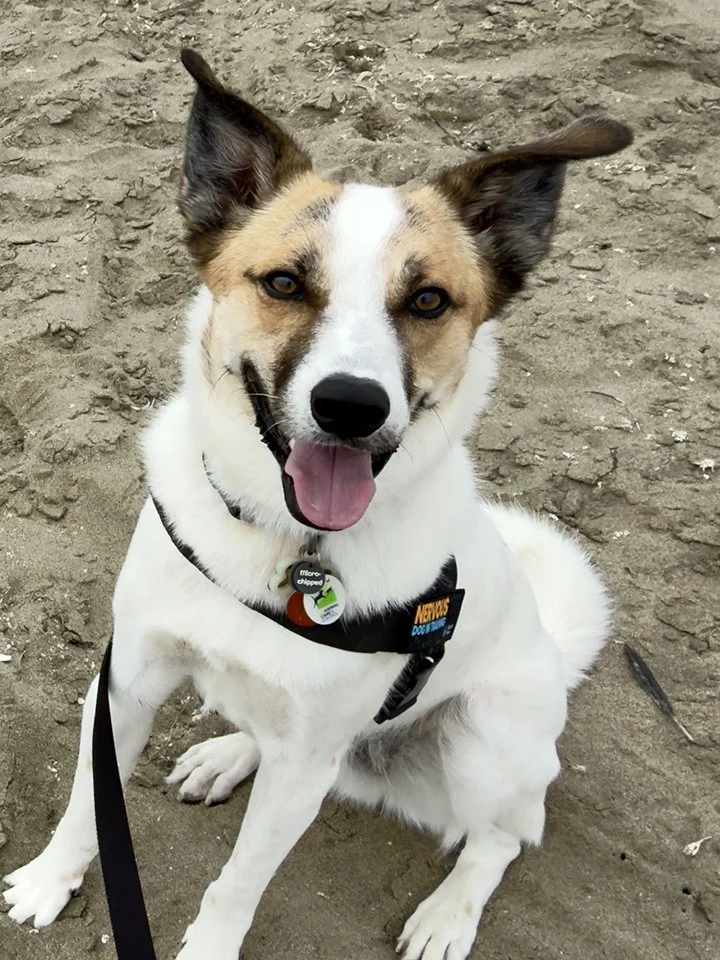
When Matt and Maria first came to us, they were concerned about Haru’s reactivity with other dogs. Close encounters could lead to lunging, snapping or nipping, so his family wanted to help Haru do better in the park.
In our first session, Haru presented as quite nervous and environmentally sensitive. He was very tentative on the walk, and flinched at just about every sound. But he also introduced another part of himself. He offered a paw and it turned out to be so much more than a shake. He curled it gently around the hand reaching toward him, and held on. The gesture was gentle, deliberate, and deeply affiliative. Haru wanted connection, and was literally asking for emotional support. We heard him loud and clear - slowed things down, and stayed there holding hands for several minutes, while offering supportive touch. As our work moved forward, it would eventually reveal something equally important about Haru’s relationships with other dogs: given enough space, and approachable enough energy, he would be able to make that connection with them as well.
Space Changed the Interaction
Close dog encounters had been especially difficult for Haru. Larger dogs could be challenging, and his reactions had become concerning enough that Matt and Maria used a muzzle for several months while helping him practice more safely.
We paid close attention to proximity because distance changed what Haru showed us. At twenty or thirty feet, he often had room to observe another dog, gather information, and stay connected with the people beside him. Parks and other open environments gave Haru more opportunities to choose his distance and approach when he showed interest. His behavior started revealing social abilities that had been much harder to see when another dog came close quickly.
We shared those observations with Matt and Maria so they could recognize the conditions that gave Haru room to communicate. They began paying closer attention to distance, the other dog’s approach, Haru’s body, and what he chose to do next. Then an encounter at Fort Funston gave everyone an especially clear example of what that room could make possible.
The Great Pyrenees at Fort Funston
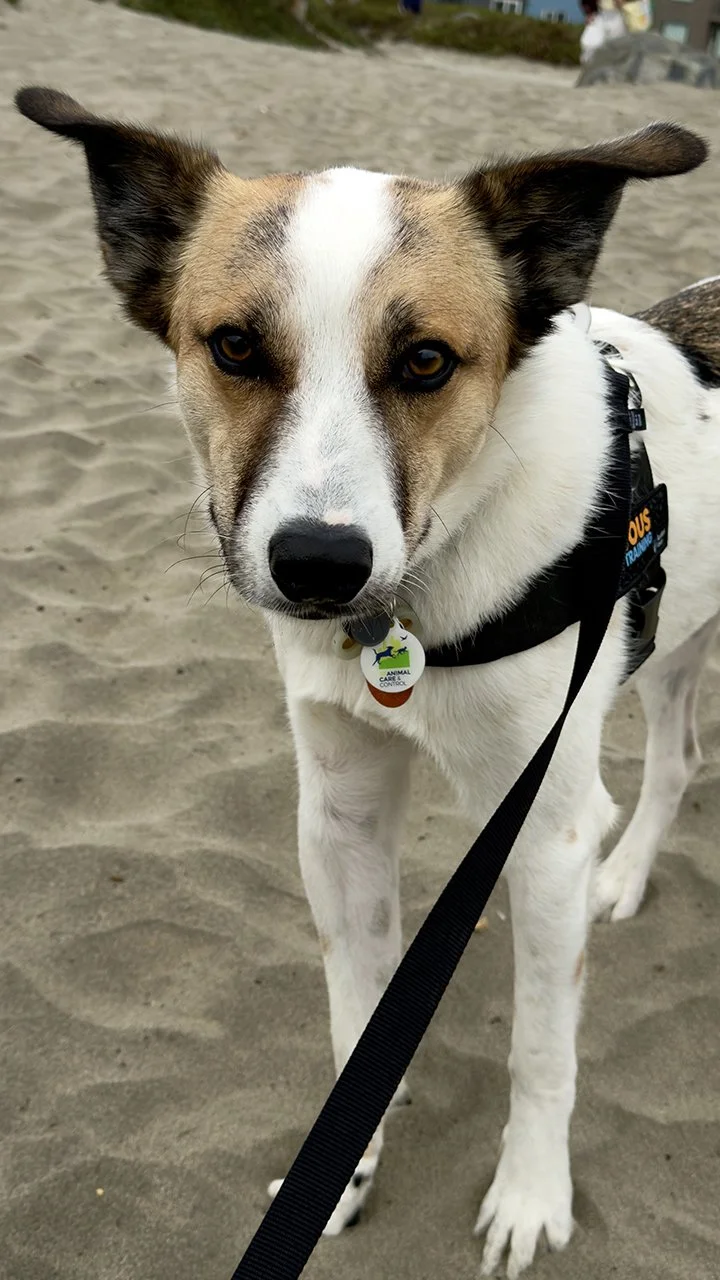
During an outing at Fort Funston, an off-leash Great Pyrenees approached Haru. The other dog brought easy social energy to the interaction, and the open environment gave Haru plenty of room to move.
Haru approached, adjusted his distance, gathered information, and stayed engaged with what the other dog was communicating. His movements gave us a clearer view of the socially capable dog Matt and Maria were learning to recognize. More interactions followed. Haru approached dogs, paused, moved away, returned, and sometimes played. The back-and-forth gave Matt and Maria something important to watch for in future encounters. Haru’s movement carried information, and another dog’s response could help him decide what to do next.
When “Give Me Space” Works
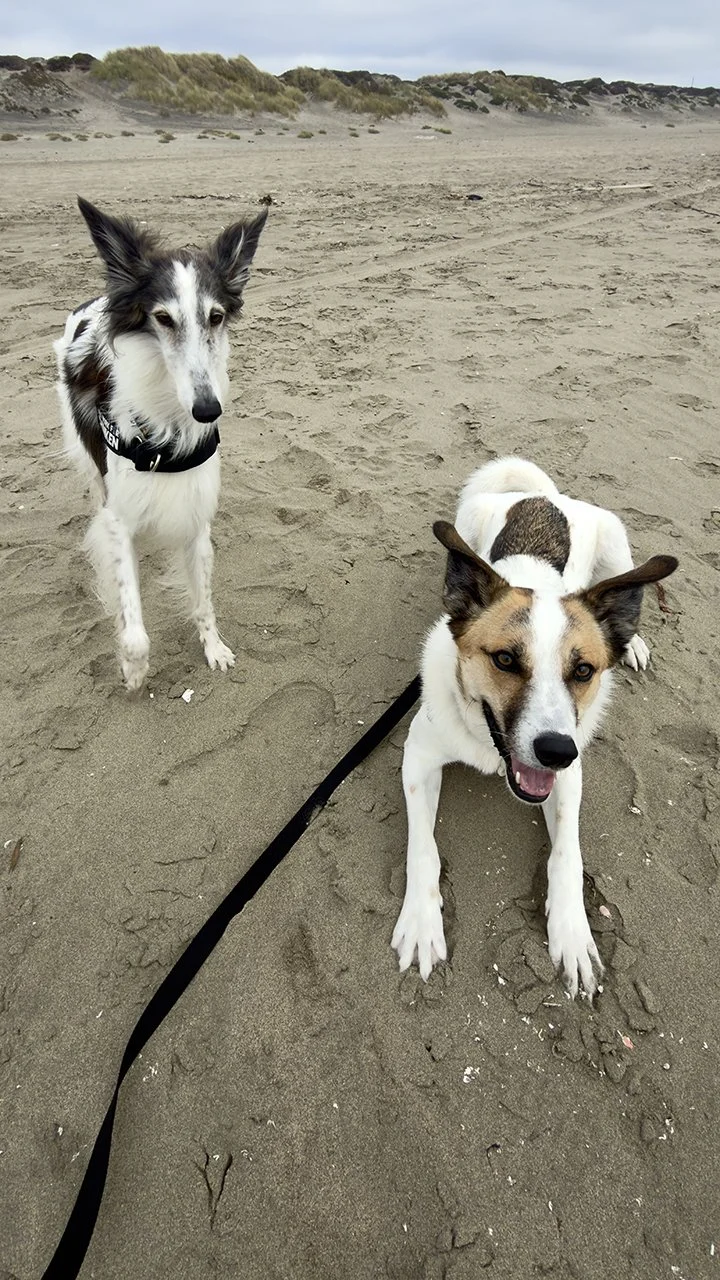
Beach outings gave us more opportunities to observe that exchange. Most of Haru’s greetings went smoothly, and his behavior made the conversation between dogs surprisingly easy to see. Sometimes Haru wanted more room. He might move away, pause, or adjust his position, and another dog could respond by giving him space. Then Haru had another choice. He might remain where he was, gather more information nearby, or approach again.
We helped Matt and Maria recognize the importance of those smaller exchanges. They could watch Haru create distance, see whether the other dog respected it, and let his next movement tell them how the interaction was developing. Those moments gave them a much richer picture than the lunge that had once captured everyone’s attention. Haru was communicating much earlier, and Matt and Maria were learning how to give those quieter messages room to work.
Haru Can Hear Other Dogs Too
The communication travels in both directions. Dogs have barked and lunged toward Haru with considerable intensity, giving him the opportunity to respond to another dog asking for more room.
These days, Haru often plays it cool. He notices the other dog’s behavior, maintains his composure, and gives the dog space. Matt and Maria can recognize those moments for what they are. Haru has developed a broader social vocabulary that includes approaching, playing, pausing, moving away, returning, and letting an interaction end, and he also responds when another dog communicates through their own movement and behavior. That gives everyone more information to work with. Haru can express what he needs, read what another dog is communicating, and adjust what he does next.
Matt and Maria Changed the Conditions
Matt and Maria created many of the conditions that allowed those interactions to develop. They practiced carefully between sessions and learned to recognize the distances, environments, and approaches that gave Haru enough room to observe, communicate, and make choices.
They also became more attentive to the smaller signals that came before a difficult interaction. A pause, a change in distance, an approach, or a decision to move away could each tell them something useful about how Haru wanted the interaction to proceed. That understanding changed what Matt and Maria could do on their own walks. They could create more room early, choose environments thoughtfully, watch how another dog responded to Haru, and let his behavior guide the next step. As Haru’s anxiety decreased, his behavior around dogs changed with it. Walks that once involved a muzzle eventually became manageable with greater ease, and well-matched encounters gave him repeated opportunities to communicate successfully. Haru remains a sensitive dog with clear preferences about proximity, predictability, and pacing. Matt and Maria understand those preferences more precisely now, and they know how to create conditions where his communication has room to matter.
The Paw in the Hand
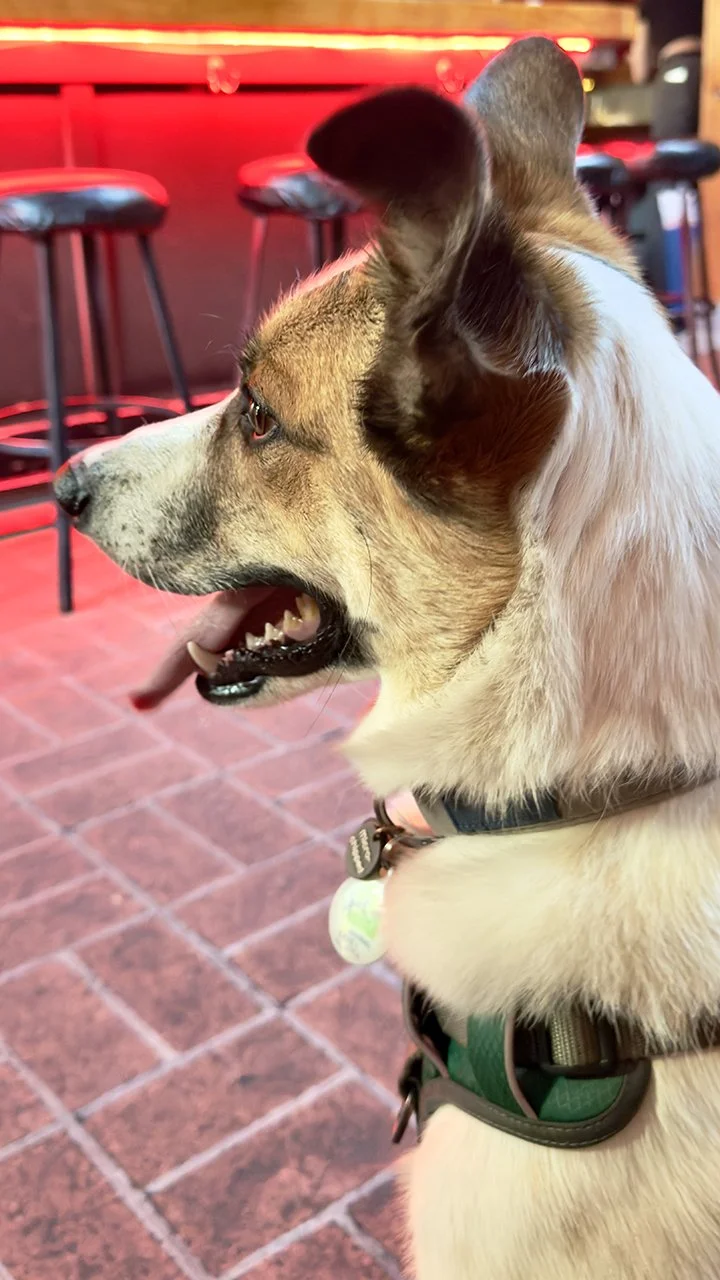
That first-session gesture stayed with us: Haru curling his paw around the hand reaching toward him and holding on. Before Fort Funston, the beach, or all the dogs who would later enter his life, Haru had already shown how deliberately he could reach toward connection. Matt and Maria can see that same deliberateness in his relationships with dogs now. Haru approaches, plays, asks for room, moves away, returns, and responds when another dog communicates a need of their own. Through those interactions, Haru has gathered evidence that his communication changes what happens around him. Matt and Maria have learned to recognize those exchanges early enough to give them room to unfold.
That makes the first paw feel even more meaningful now. Haru can reach toward connection when he wants it and ask for space when he needs it, while Matt and Maria know how to listen for both.