The Walk Starts Before You Leave the House
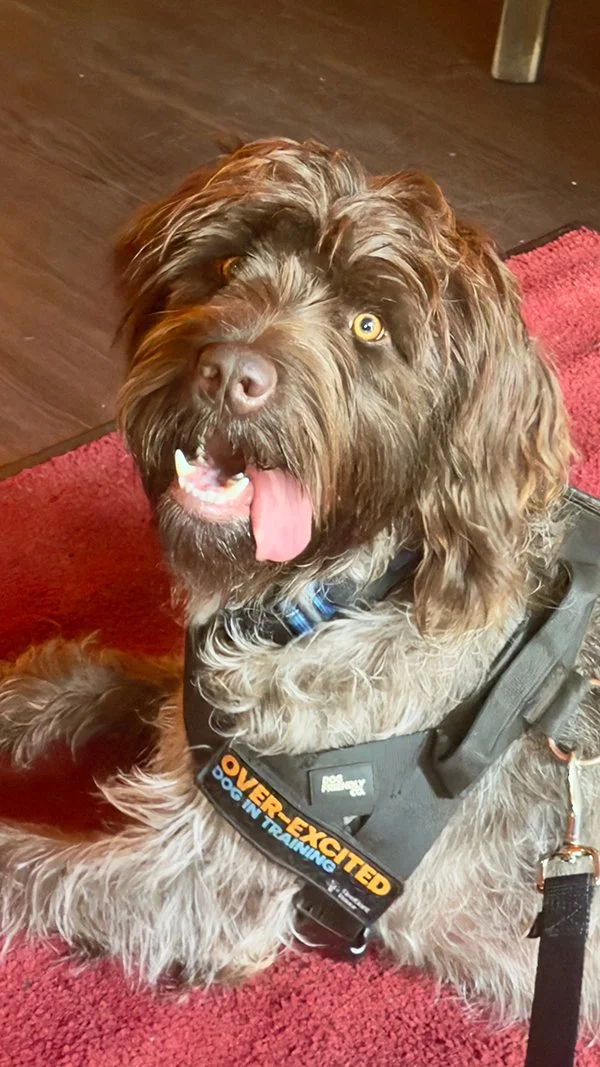
You clip on the leash, head outside, and things seem to change quickly. Your dog starts pulling toward an interesting smell, becomes absorbed in a bird across the street, or has a harder time reconnecting with you as the neighborhood comes alive around them. It can be tempting to think that the challenge began right there on the sidewalk, but your dog may have been communicating something useful much earlier.
The first few minutes of every walk contain a series of transitions, and each one gives you information. There is the shift from resting at home to seeing the leash, from moving toward the door to stepping through it, and from a familiar indoor environment to a hallway, elevator, driveway, or street filled with smells, sounds, movement, and possibilities. When we start paying attention to those transitions, we can often find earlier opportunities to support our dogs before the outside world becomes much harder to navigate.
Rewind the conversation
When something becomes difficult on a walk, start by asking what happened immediately before it. If your dog begins pulling toward a squirrel, notice what they were doing before the pulling started. Maybe their pace changed, their attention moved farther ahead, their body became more alert, or they began scanning the environment differently.
Then rewind another step. What was happening before your dog noticed the squirrel? Were they moving with you and checking in occasionally, or had their attention already shifted toward bushes, trees, smells, and movement around them? The goal here is simple observation. You are looking for the point where the conversation began changing.
You can keep rewinding all the way home. Notice what happens when the leash appears, how your dog approaches the door, and what changes when you open it. Watch their movement through the hallway or down the front steps, then notice what happens when you reach the sidewalk. Those small transitions can tell you how available your dog feels for the walk you are about to share.
Paddington gave us a good reason to rewind
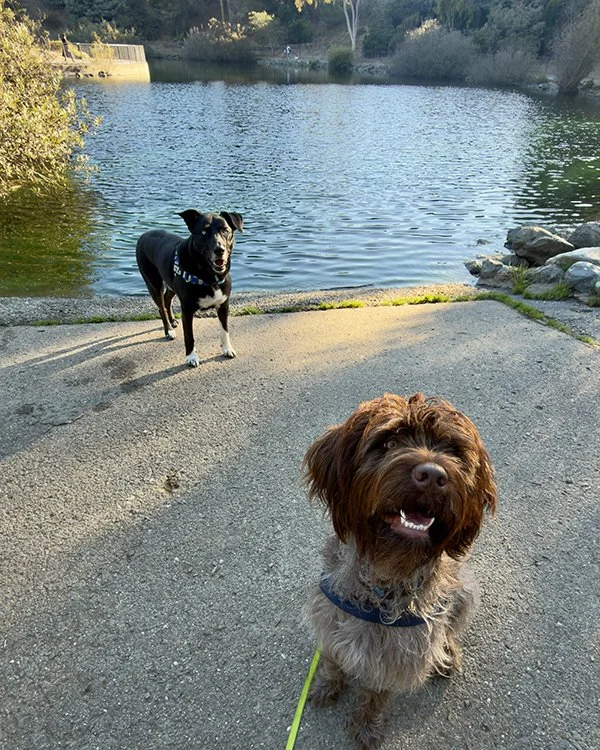
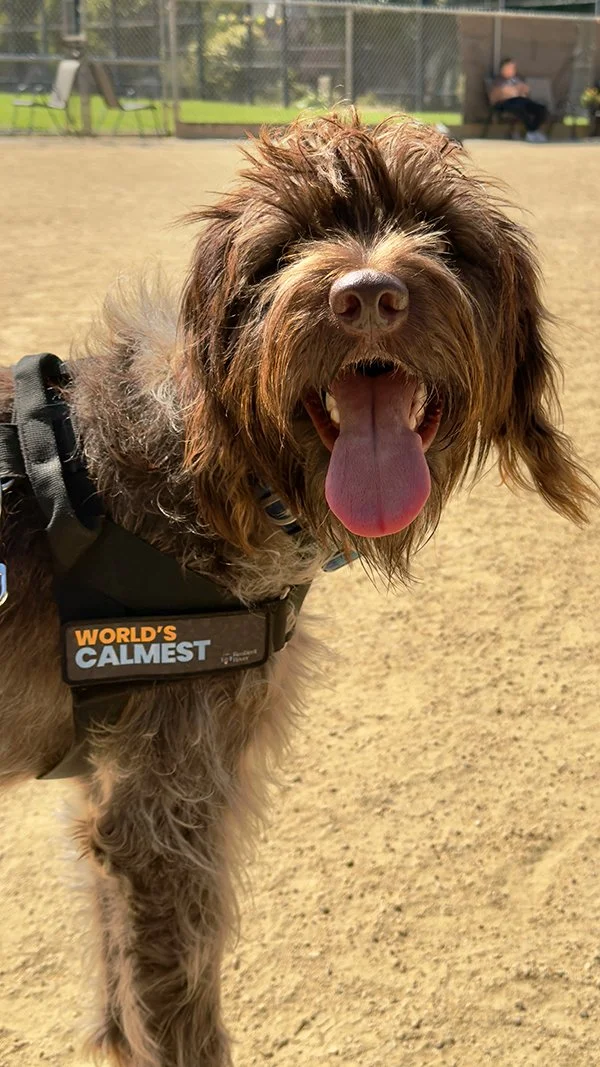
Paddington is a young Wirehaired Pointing Griffon who came into my life with a lot of enthusiasm for the world around him. His people described him as sweet, exceptionally smart, and quick to learn. At home, he already knew plenty of useful skills and could become so eager when treats appeared that he would cycle through several familiar behaviors while trying to figure out which one might earn the reward.
Outside, Paddington had much more information competing for his attention. He pulled on walks, became highly excited around other dogs, and found birds particularly compelling. His family described moments when a bird could capture his attention so completely that reconnecting became extremely difficult. During one outing in Golden Gate Park, Paddington spotted a bird and ran after it, leaving his person trying to catch up while the rest of the world had temporarily become far less relevant to him.
Those bigger moments gave us useful information, but they also gave us a reason to look earlier. Rather than waiting for Paddington to become intensely focused on a bird and then asking him to disengage, we could start exploring what his body and attention looked like while he still had more capacity to participate with us. That shifted the work from responding primarily to the most obvious behavior toward noticing the smaller changes that preceded it.
Earlier gives you more choices
Think of your dog’s arousal as something that can build progressively. In a relatively regulated state, they may be able to explore the environment, notice something interesting, check back in with you, eat, play, or change direction fairly easily. As excitement increases, their attention may narrow and some of those choices can become harder to access.
That progression matters because the response that helps at one point may have much less value several moments later. A dog who can notice a bird and then look back at you gives you several ways to continue the conversation. A dog whose attention has narrowed completely onto that bird may need more distance, movement, time, or another form of support before reconnecting becomes available again.
This is one reason management can sometimes feel frustrating. We may begin responding when the behavior becomes obvious to us, while the dog has already moved through several earlier stages of the experience. Learning to recognize those stages gives us more opportunities to choose an appropriate response while our dog still has more choices available too.
The doorway can tell you a lot
For some dogs, the transition begins before the walk itself. A quiet home offers one collection of smells, sounds, movement, and expectations, while opening the front door can introduce an enormous amount of information all at once. Your dog may hear another dog in the hallway, smell who passed through earlier, notice a bird outside, anticipate a favorite destination, or simply become excited because going through that door predicts access to the wider world.
Watch what happens during that transition. Notice whether your dog can pause, look around, check in with you, or respond to something they usually find easy indoors. Pay attention to changes in pace, breathing, body tension, scanning, vocalizing, or interest in things they normally value. None of those observations needs to carry a fixed meaning on its own; together and in context, they can help you understand how your dog is experiencing the transition.
This also gives you permission to begin supporting them earlier. You might spend a little more time together before opening the door, offer an opportunity to reconnect in the hallway, adjust your pace, create more distance from something interesting, or use access to the next part of the walk as part of the conversation. The useful response will depend on the dog in front of you and what they are communicating in that moment.
Rewards can change when the environment changes
A reward only has value when your dog wants it in that moment. Food may be tremendously useful in the living room and considerably less interesting when the sidewalk offers squirrels, smells, other dogs, movement, and places to explore. That change gives you information rather than a reason to conclude that your dog suddenly stopped knowing what they learned indoors.
Look more broadly at what your dog values. Food can be useful, and so can play, affection, movement, sniffing, exploration, and access to something they want. Sometimes moving forward becomes part of the reinforcement. Sometimes the opportunity to investigate a smell or explore an appropriate area gives you a way to collaborate with what your dog already wants rather than competing against the entire outside world.
The question becomes less about finding one reward powerful enough to overcome everything else and more about reading the moment in front of you. What does your dog want right now, how available are they to communicate with you, and what can you offer that helps the two of you stay in the conversation? Those answers can change from one block to the next.
Practice finding the earlier moment
On your next few walks, choose one transition and simply observe it more closely. You might watch what happens between picking up the leash and opening the door, or between leaving the building and reaching the sidewalk. Notice where your dog can still explore and reconnect easily, then notice the first small change that tells you the environment has become more compelling.
You do not need to make every walk a training session or respond to every signal you notice. The first skill is learning to see the sequence more clearly. Once you can recognize where the conversation begins changing, you can experiment with offering support earlier and observe what happens next.
Over time, that can change the way you think about the difficult moments too. The bird, dog, bicycle, bush, or exciting smell may still matter, but you have more information about the journey that brought your dog there. Instead of waiting for the loudest part of the conversation, you can begin listening while your dog is still whispering.
And sometimes, that means the most useful part of your walk happens before you ever leave the house. If you’d like more to be possible with your dog, start a conversation with PupPossible today.