Don’t Touch Me and Don’t Touch My Stuff! Supporting Dogs Who Guard Their Body, Space and Things
You reach toward your dog’s collar and their body goes still.
Or you walk near something they value and notice their expression change. These moments can feel unsettling because something ordinary to you has suddenly become important to your dog. Your dog is communicating about how that moment feels. The stiffening or growling gives you information about their comfort with what is happening. When you notice those signals early, you have more choices about how to respond.
Resource guarding and sensitivity around handling can both benefit from counter-conditioning.
The process helps your dog form a different emotional association with something that currently creates concern. It also asks you to become a careful observer of what your dog can comfortably experience. There is a useful PupPossible™ mantra for this work: Just Enjoy the Moment. Counter-conditioning asks you to stop chasing the finished result for a while. You create one experience your dog can handle, let something good happen there, and allow that moment to matter.
Start With What Your Dog Is Telling You
A growl can make people nervous. A dog freezing when you reach toward them can be easier to miss, but that stillness may carry equally useful information.
Watch the whole dog. You may see their body become tense as your hand approaches the collar. Around a valued object, you might notice them become very still as you move closer. These changes tell you that the interaction has become harder. Catching them gives you an opportunity to respond before your dog feels the need to communicate more intensely.
That response might simply mean giving them more space. Then you can think about what happened immediately before their behavior changed. The point where your dog first became concerned gives you useful information for future training. We Train People to Speak Dog begins here. Your dog communicates, you notice, and your response shows them that their communication matters.
Behavior and Emotion Give Us Different Things to Work With
Training often focuses on behavior. Your dog does something, something happens afterward, and that consequence influences what they are likely to do in the future. This form of learning is called operant conditioning.
Counter-conditioning, by contrast, works with association. Your dog has learned that one event predicts another, and that prediction carries an emotional response. If reaching toward their collar has become uncomfortable, the approaching hand may create tension before contact even happens. We can change that prediction through carefully planned experiences. Your hand begins to move toward the collar, and something your dog loves appears. You repeat the pairing at a level your dog can comfortably handle.
Over time, the movement can begin to predict something welcome. That change in expectation gives the emotional response an opportunity to change too. The same principle applies to resource guarding. Your approach toward a valued item can begin predicting something worthwhile for your dog. You are helping them learn what your presence means in that particular context.
Work Where Your Dog Can Learn
Counter-conditioning depends heavily on intensity. The trigger needs to be noticeable enough for your dog to form the new association while remaining manageable enough for learning.
This is where reading body language becomes part of the training plan. A loose body and comfortable engagement suggest that your current setup may be workable. When tension begins appearing, your dog may be telling you that the exercise has become harder. Food can provide another piece of information. A dog who was happily eating and suddenly stops may be experiencing more concern. That change should make you curious about what increased the difficulty.
Create more distance or make the interaction less intense. Then watch what happens. If your dog can comfortably engage again, you have found a better place to continue. This takes some discipline from the human side because progress can make us eager for the next step. Counter-conditioning rewards patience. Your dog's comfort determines how quickly the exercise can develop.
Make the Good Stuff Matter
The reward you use for counter-conditioning has an important job. You are trying to build a strong positive association, so choose something your dog genuinely values. For many dogs, food works beautifully because you can deliver it quickly and create repeated pairings. Small pieces of something especially appealing can help the experience stand out. Your dog's response will tell you whether your choice has enough value.
Consider a dog who feels uneasy when you reach toward their collar. You might begin with a small hand movement at a comfortable distance, then immediately offer something wonderful. After several relaxed repetitions, you can evaluate whether your dog feels ready for a slightly closer movement.
The sequence matters. Your dog notices the thing that concerns them, then something good follows. With repetition, that first event begins carrying new information. This is where Just Enjoy the Moment can change your approach. You do not need to reach the collar today. You need a dog who can experience this particular repetition comfortably enough to learn from it.
Let Your Dog Help Set the Pace
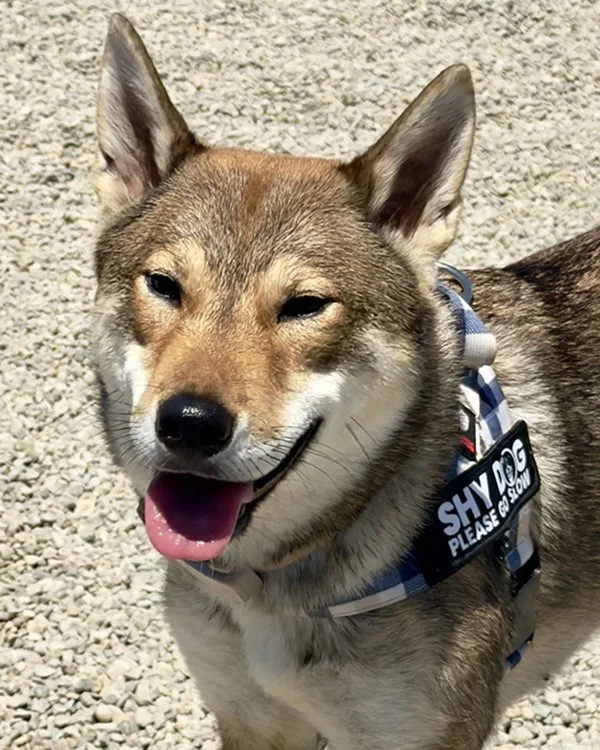
Your dog participates in counter-conditioning through the information they give you. We like to think about your options as push, drop, or stick.
Push means your dog looks comfortable enough for a small increase in difficulty. Perhaps your hand can move a little closer during the next repetition. Make the change small enough that you can still observe how your dog experiences it. Drop means your dog has shown you that the current step asks too much. Increase distance or return to an easier version. That adjustment keeps you working where your dog can participate.
Stick can be the hardest choice for people because nothing appears to be advancing. Your dog feels comfortable at the current level, so you stay there and give that experience time to become familiar. Repetition can deepen the association without increasing difficulty. This creates a conversation throughout the session. You make a small choice, then your dog responds. Their response helps you decide what happens next.
Resource Guarding Changes When Your Approach Predicts Good Things
Imagine your dog has something they value and becomes tense when you approach. Your first training goal can focus on changing what your approach predicts. Begin at a distance where your dog can notice you and remain comfortable. Walk into that range, offer something they love, then move away. With repetition, your arrival starts carrying different information.
Pay close attention to the dog's response as the pattern develops. You may eventually see them look toward you when you approach. That anticipation can tell you that your presence has begun acquiring a more positive meaning. From there, you can gradually work at closer distances while continuing to read their body language. Each change in difficulty should remain small enough for your dog to stay engaged.
Resource guarding can carry meaningful bite risk, so the individual dog and context matter. If your dog has snapped or bitten around valued items, professional guidance can help you create a plan with appropriate safety measures. You can still build partnership while taking the risk seriously.

Body Handling Works Best as a Conversation
Handling gives us another opportunity to make choice visible. Many things humans routinely do to dogs involve entering their personal space, so learning to notice willingness becomes especially valuable.
Suppose you want your dog to feel more comfortable with collar handling. You can break that interaction into small pieces and pair each manageable step with something your dog values. Watch what they do as you progress. A dog who stays engaged may be ready for another repetition. A dog who moves away has given you useful information. Allowing that choice can make future participation more meaningful.
Over time, you may also develop ways for your dog to opt into handling. Their participation becomes part of the interaction rather than something that simply happens to them. That matters beyond the training exercise. When your dog learns that you notice hesitation and respond to it, your behavior becomes more predictable. Predictability helps create the conditions where trust can grow.
Just Enjoy the Moment
Counter-conditioning can tempt you to measure every session by how much closer you got. That focus can pull your attention away from the experience your dog is having right now. Sometimes the most useful session ends at exactly the same distance where it began. Your dog noticed the trigger and stayed comfortable. Something good happened, and you stopped while the experience was still working for them.
Just Enjoy the Moment reminds us that those repetitions have value. You can notice the softening in your dog's body. You can enjoy their willingness to stay engaged with you.
There will be another opportunity to practice. You do not need to fit the entire journey into this session. Today can simply add another experience that helps your dog feel more comfortable. That mindset can help you become a better training partner too. Instead of watching constantly for the next milestone, you begin noticing the information your dog gives you along the way. Their experience becomes part of how you measure progress.
Trust Grows Through What You Do Next
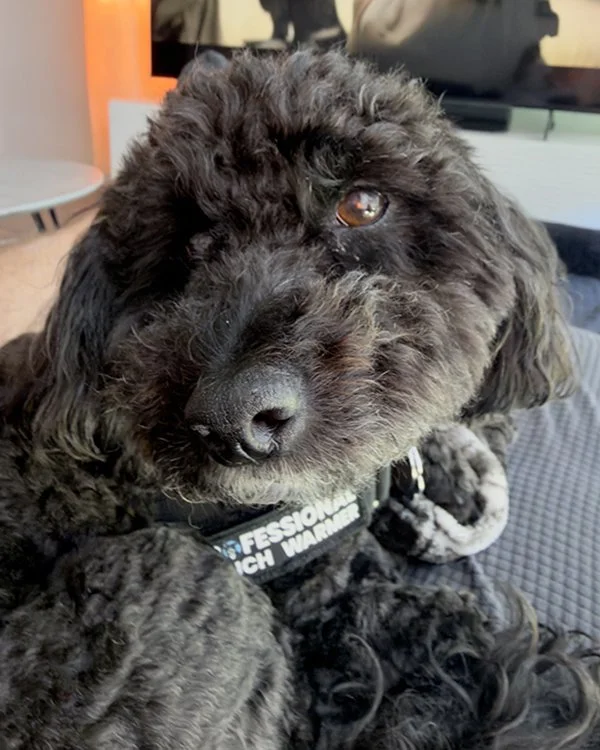
A dog who guards something valuable or worries about being touched can put you in situations where you need to make thoughtful decisions. Counter-conditioning gives you a way to work with the emotional experience underneath those moments.
You begin by listening. Then you create experiences your dog can handle and pair them with outcomes they value. Their response tells you how to shape the next interaction. Over time, those experiences can change what your movement predicts. A hand approaching can carry a different meaning. Your presence near something valuable can become easier for your dog to process. That shift opens up possibility because you have changed the conversation between you. Your dog learns from what repeatedly happens around you, while you become more fluent in recognizing what they are ready for.
Just Enjoy the Moment keeps the work grounded in the experience you are creating today. When you make that experience safe, clear, and worth participating in, you give trust somewhere to grow.
If resource guarding or body handling has become difficult in your life together, start a conversation with PupPossible. We can help you read what your dog is communicating and build a plan that respects where they are while guiding you toward what comes next.